5 Best Industrial IoT Platforms for Secure Operations in 2026
Key takeaways
- Portainer is the best choice for enterprise and industrial teams that need secure, vendor-agnostic control over containerized workloads across distributed edge, on-prem, and cloud environments.
- Cumulocity IoT stands out for organizations focused on turning machine data into AI-driven insights, predictive maintenance, and new digital service models.
- Siemens Insights Hub is strongest for manufacturers already standardized on Siemens automation.
- PTC ThingWorx is ideal for asset-intensive enterprises building custom industrial applications, dashboards, and AR-enabled workflows.
- AWS IoT is best suited for cloud-native teams seeking maximum flexibility and scale.
Did you know the global industrial IoT market is projected to surpass $602 billion in 2026, up from $514.39 billion in 2025?
This growth reflects how organizations are increasingly connecting machines and operational systems to monitor performance, automate processes, and respond faster on the factory floor and in the field.
But as these environments scale, challenges around reliability and managing distributed infrastructure become harder to ignore.
In this article, we break down five of the best industrial IoT platforms, where they shine, where they fall short, and who each platform is best for.
TL;DR:
| Name | Best For | Top Feature | Pricing | G2 Rating |
|---|---|---|---|---|
| Portainer | Managing containerized workloads across industrial edge, on-prem, and cloud environments | Secure, vendor-neutral container management with enterprise RBAC and edge controls | Edge / IIoT Enterprise from $14,400/year | 4.8/5 (280+ reviews) |
| Cumulocity IoT | Turning machine data into AI-driven operational insights | Strong device lifecycle management with built-in AIoT and streaming analytics | Custom pricing | 4.3/5 (10+ reviews) |
| Siemens Insights Hub | Smart manufacturing and Industry 4.0 initiatives | Deep integration with Siemens automation and manufacturing analytics | Custom pricing | 4.6/5 (55+ reviews) |
| PTC ThingWorx | Building custom industrial applications and workflows | Low-code app development combined with industrial data and AR capabilities | Custom pricing | 3.9/5 (30+ reviews) |
| AWS IoT | Cloud-native, large-scale IoT deployments | Highly scalable, modular IoT services tightly integrated with AWS | Custom pricing | 4.7/5 (15+ reviews) |
1. Portainer: Best for Industrial Edge Container Management
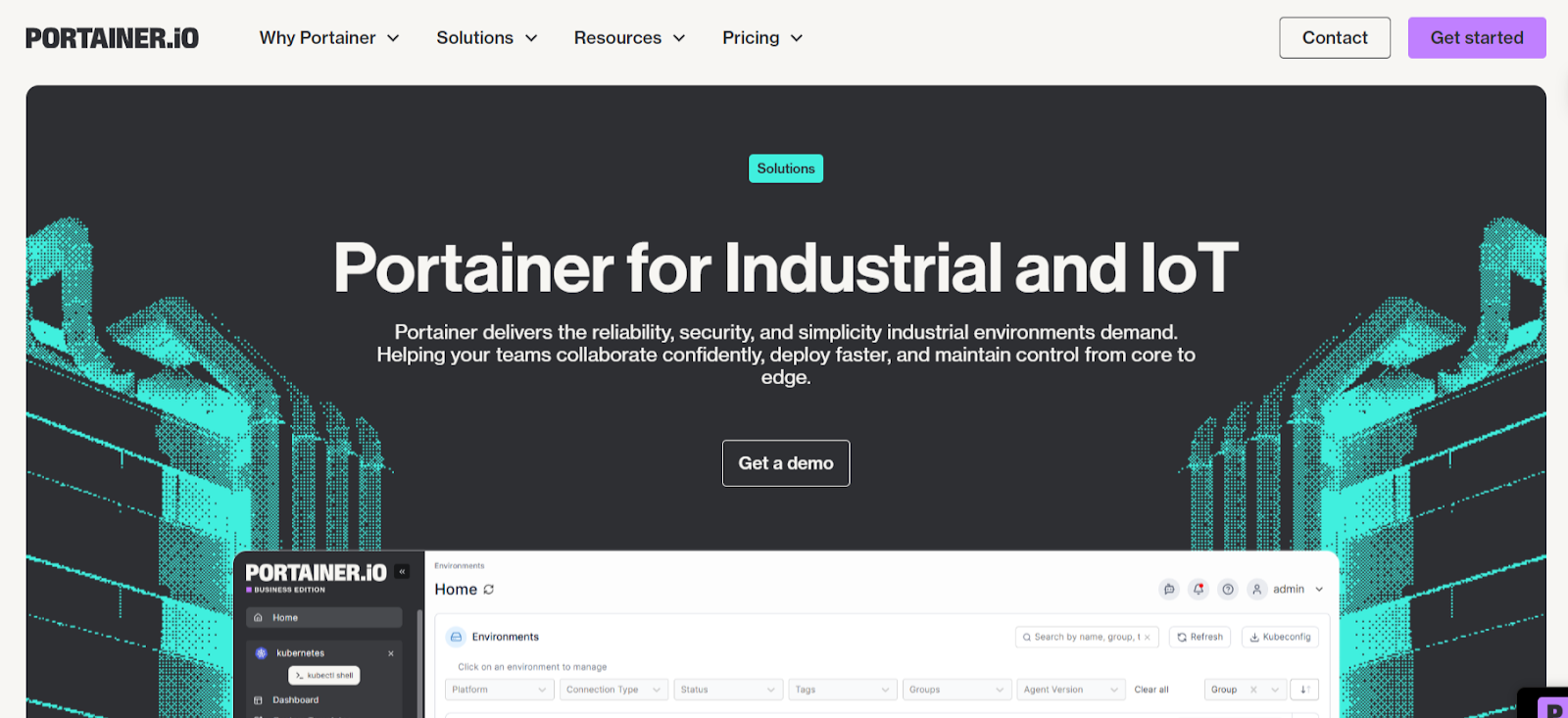
Portainer is an enterprise container management platform built for industrial and IoT environments where control, security, and operational consistency are critical.
It enables platform, operations, and DevOps container teams to manage workloads across distributed edge devices, on-prem, and cloud environments from a single interface. Portainer supports Docker-based deployments and lightweight Kubernetes where appropriate, without locking teams into a specific vendor or infrastructure model.
Key features
Let’s look at the core Portainer features that matter most when managing containerized workloads across industrial and IoT environments.
1. Edge Groups for organizing IIoT devices at scale
Portainer’s Edge Groups let teams logically group IIoT devices based on location, environment, customer, or function.
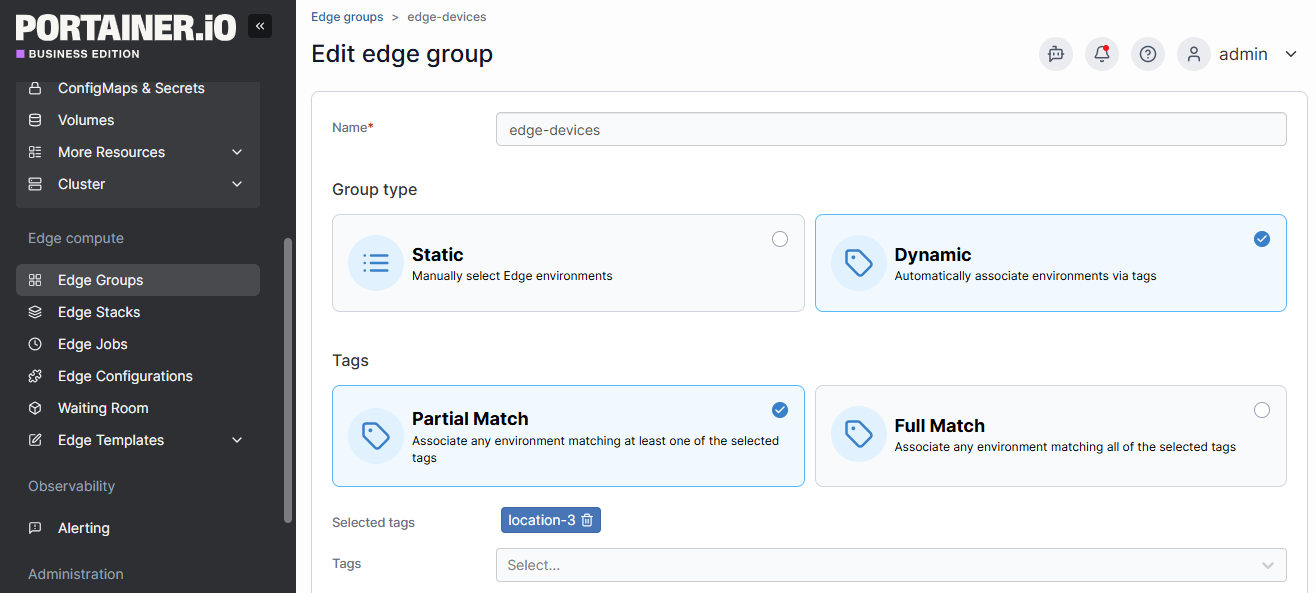
This makes it easier to manage large, distributed fleets without handling devices individually. Instead of targeting single nodes, teams can deploy and manage workloads consistently across defined groups of edge devices while monitoring fleet health through a centralized IoT device management dashboard.
2. Edge Stacks with controlled update rollouts
Portainer’s Edge Stacks allow teams to deploy and update containerized applications across groups of edge devices using a single stack definition.
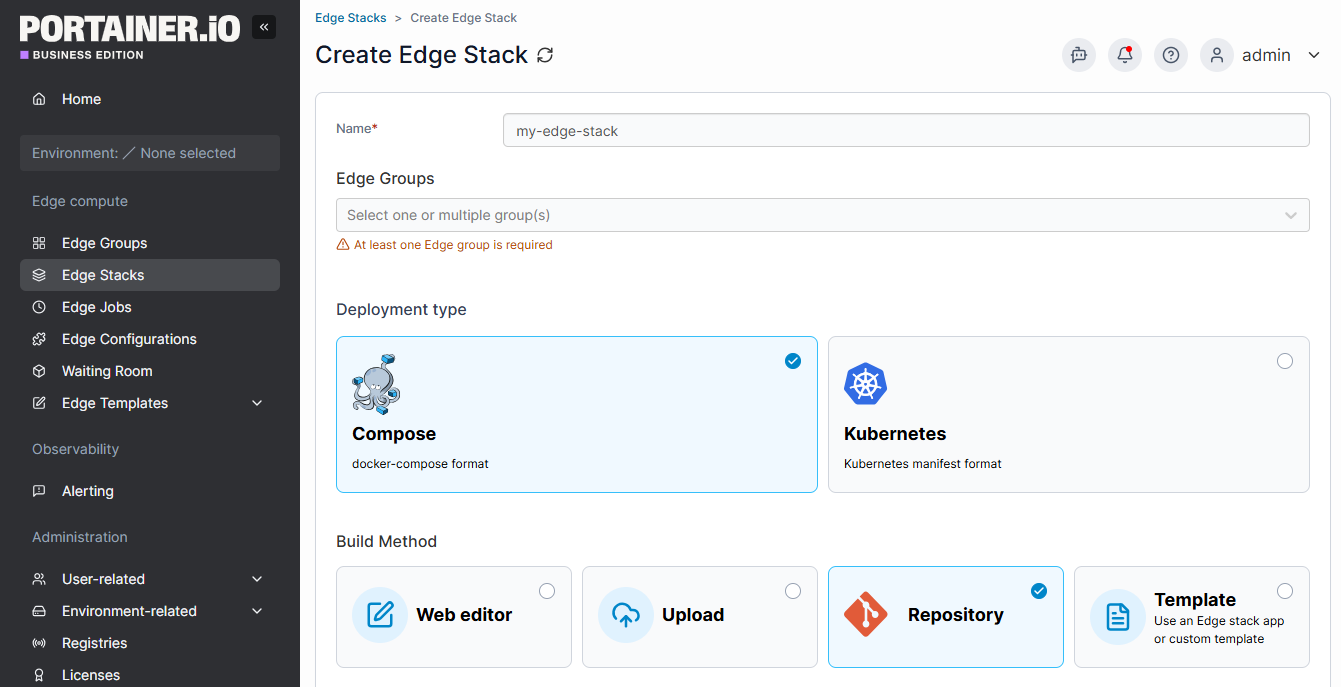
Updates are pulled by edge agents rather than pushed centrally, which helps teams roll out changes gradually, limit disruption, and maintain stability across distributed industrial environments.

3. Remote update and rollback for edge agents
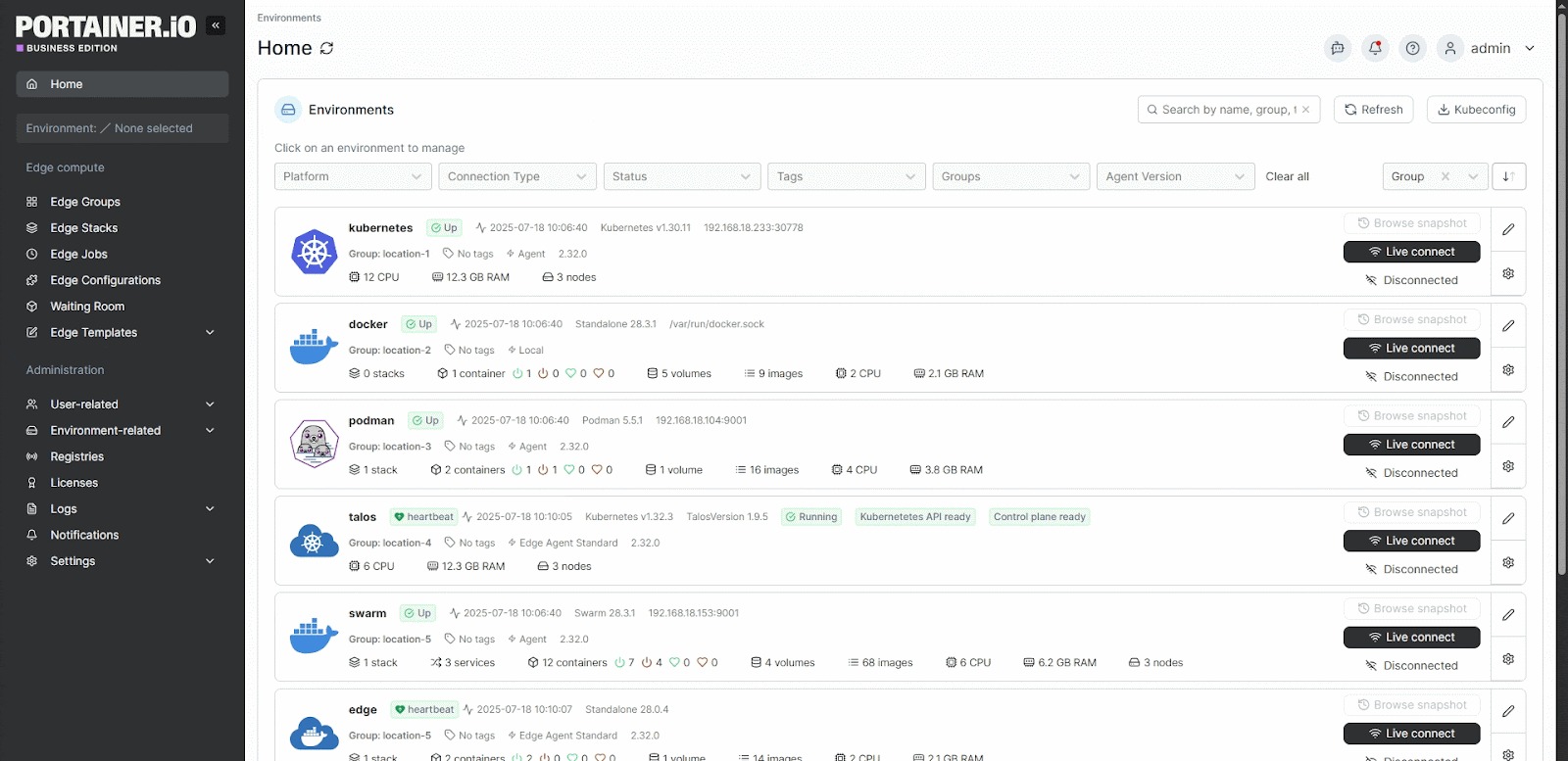
Portainer allows teams to remotely update or roll back the Portainer Edge Agent running on IIoT devices. This is especially valuable in industrial environments where physical access is limited, enabling faster recovery and simpler lifecycle management without site visits.
Pricing
| Pricing Plan | Cost |
|---|---|
| Edge / IIoT Professional | From $2,995/year |
| Edge / IIoT Enterprise | From $14,400/year |
For complete plan details and volume-based options, visit Portainer’s Business and IIoT Pricing page.
Where Portainer shines
- Centralized container operations for industrial environments: Portainer gives teams a single control plane to deploy, update, and govern containers running across edge devices, on-prem systems, and cloud infrastructure.
- Operational control for shared, multi-team environments: With fine-grained RBAC and clear environment boundaries, Portainer helps industrial organizations safely operate shared infrastructure across internal teams, vendors, and partners without sacrificing governance or slowing delivery.
Watch this video to learn more about role-based access control (RBAC) in Portainer:
Role-Based Access Control in Portainer - A Deep Dive
- Vendor-neutral container operations: Portainer supports Docker, Podman, and Kubernetes across hybrid environments, giving teams centralized control while avoiding lock-in to a specific cloud, runtime, or industrial platform.
- Purpose-built Kubernetes for IIoT with KubeSolo: Portainer developed KubeSolo, an ultra-lightweight, single-node Kubernetes designed for resource-constrained IIoT and edge devices where standard Kubernetes is too heavy.
Where Portainer falls short
- Not an industrial data or analytics platform: Portainer focuses on managing containerized infrastructure and applications, not ingesting sensor data, running analytics, or modeling industrial telemetry.
- More than needed for very small or simple edge setups: Teams running a handful of devices or basic Docker workloads may not need Portainer’s enterprise-grade governance and fleet-level management.
Customer reviews
Source: G2
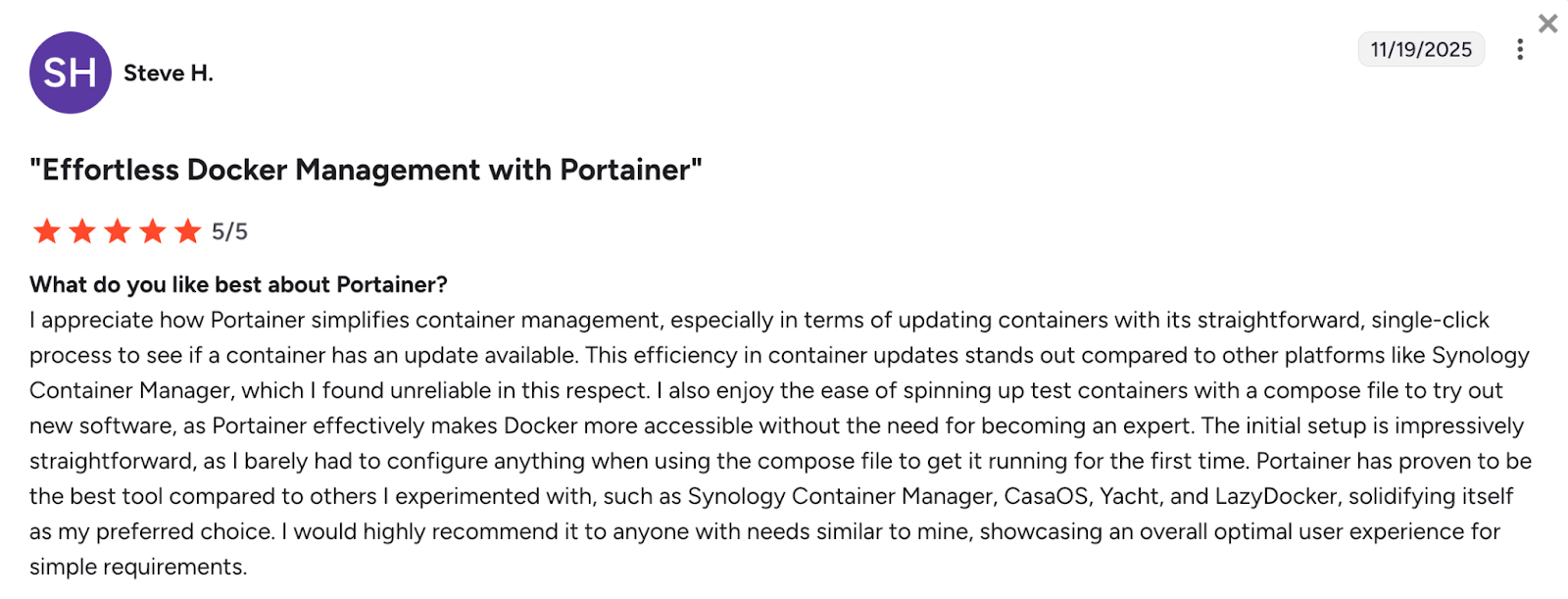
“Portainer makes container management incredibly straightforward. The UI is clean and intuitive, which saves a lot of time compared to manually managing Docker or Kubernetes through CLI. It’s easy to deploy and we use it frequently for day-to-day container tasks,” says Bharath D.
Who Portainer is best for
- Enterprise platform and operations teams: Managing containerized applications at scale across industrial environments.
- Industrial organizations with shared infrastructure: Where security, governance, and operational consistency across sites, teams, and vendors are critical.
- Teams that want control without lock-in: Organizations looking for a vendor-neutral management layer across Docker, Kubernetes, and hybrid container environments.
Learn how Portainer helped Cummins, a global leader in commercial vehicles and industrial equipment, reduce costs by unifying the tech stack across all OEMs and devices.
2. Cumulocity IoT
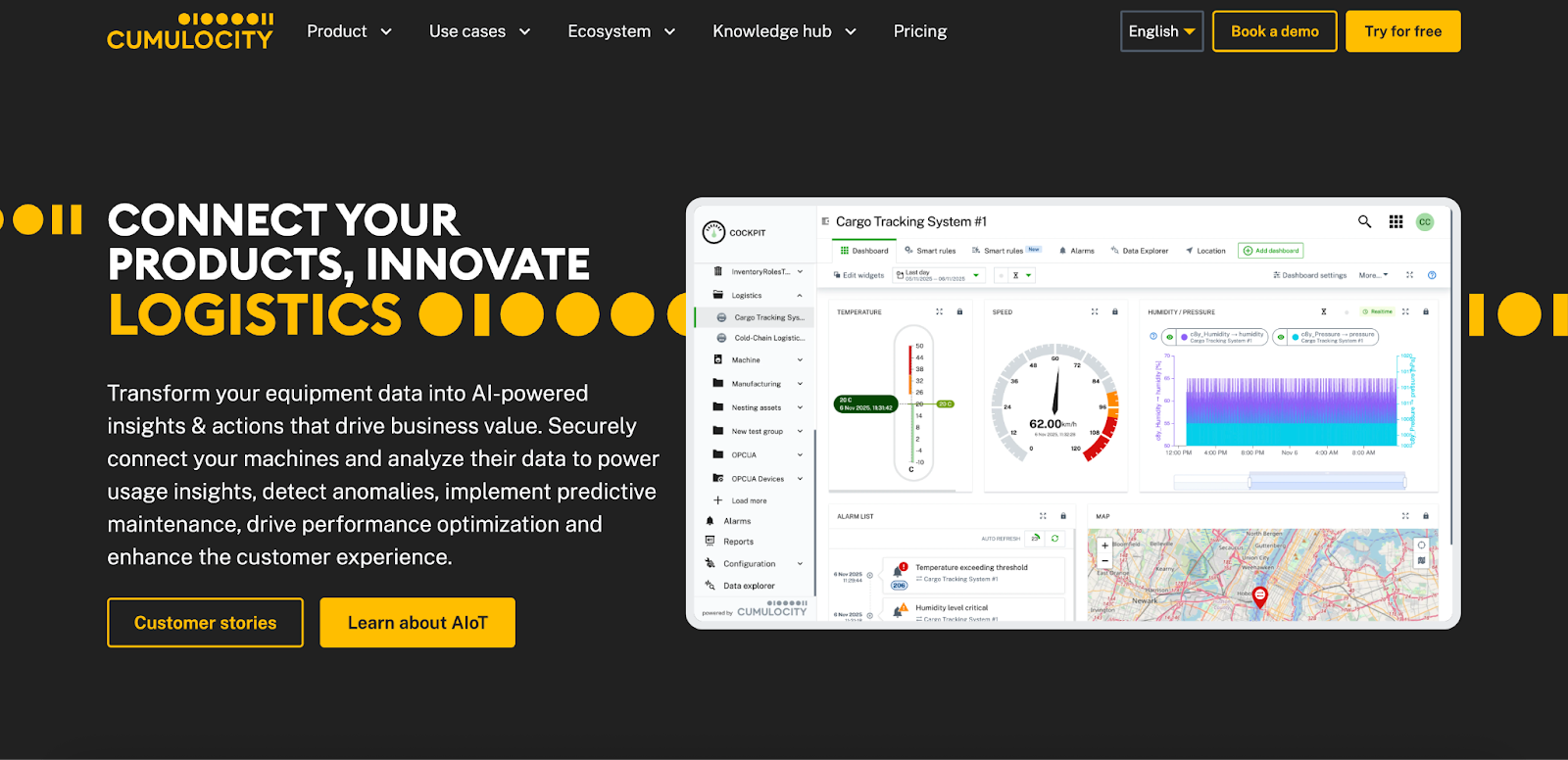
Cumulocity IoT is an end-to-end industrial IoT and AIoT platform designed to connect, manage, and analyze industrial devices at scale. It focuses on transforming machine and equipment data into operational insights, digital services, and new business models, rather than managing underlying infrastructure.
Key features
- Device integration and lifecycle management: It supports rapid device onboarding using pre-integrated protocols, thin-edge.io, and SDKs, so teams can manage device fleets from onboarding through decommissioning.
- Digital twins and asset modeling: The Digital Twin Manager lets organizations model physical assets and their relationships, embedding device data into a business context for deeper operational insight.
- Real-time streaming analytics and AIoT capabilities: Built-in streaming analytics enable real-time alarms, rules, and actions, while integrations with AI and machine learning tools support predictive maintenance, anomaly detection, and performance optimization.
Pricing
Cumulocity IoT pricing is not publicly listed and varies based on deployment model, number of connected devices, data volume, and feature requirements.
Where Cumulocity IoT shines
- Turning machine data into business outcomes: Cumulocity shines when organizations want to move beyond connectivity and use industrial data to drive measurable outcomes, such as reduced downtime, higher asset utilization, and new digital services.
- AIoT-driven operational and service innovation: The platform is well-suited for companies embedding AI and analytics into industrial workflows, whether for predictive maintenance, performance optimization, or smart connected product offerings.
Where Cumulocity IoT falls short
- Steeper learning curve: The platform’s flexibility adds complexity, which can slow onboarding and customization for less technical teams.
- Dense interface at scale: As deployments grow, the volume of settings and controls can make navigation less intuitive.
- Limited infrastructure control: Cumulocity focuses on device connectivity, data, and analytics, not on managing container runtimes or operational infrastructure at the edge.
Customer reviews
“It would be great to increase the number of supported devices. There is also a lack of a lightweight version of the interface, because you can get confused in the number of settings. Some of the settings are not quite obvious in their usefulness,” shares Aleksey S.
Who Cumulocity IoT is best for
- Industrial teams building AIoT solutions: Organizations focused on predictive maintenance, performance optimization, and data-driven digital services.
- Companies monetizing machine data: Teams developing smart connected products or transitioning toward Equipment-as-a-Service models.
3. Siemens Insights Hub
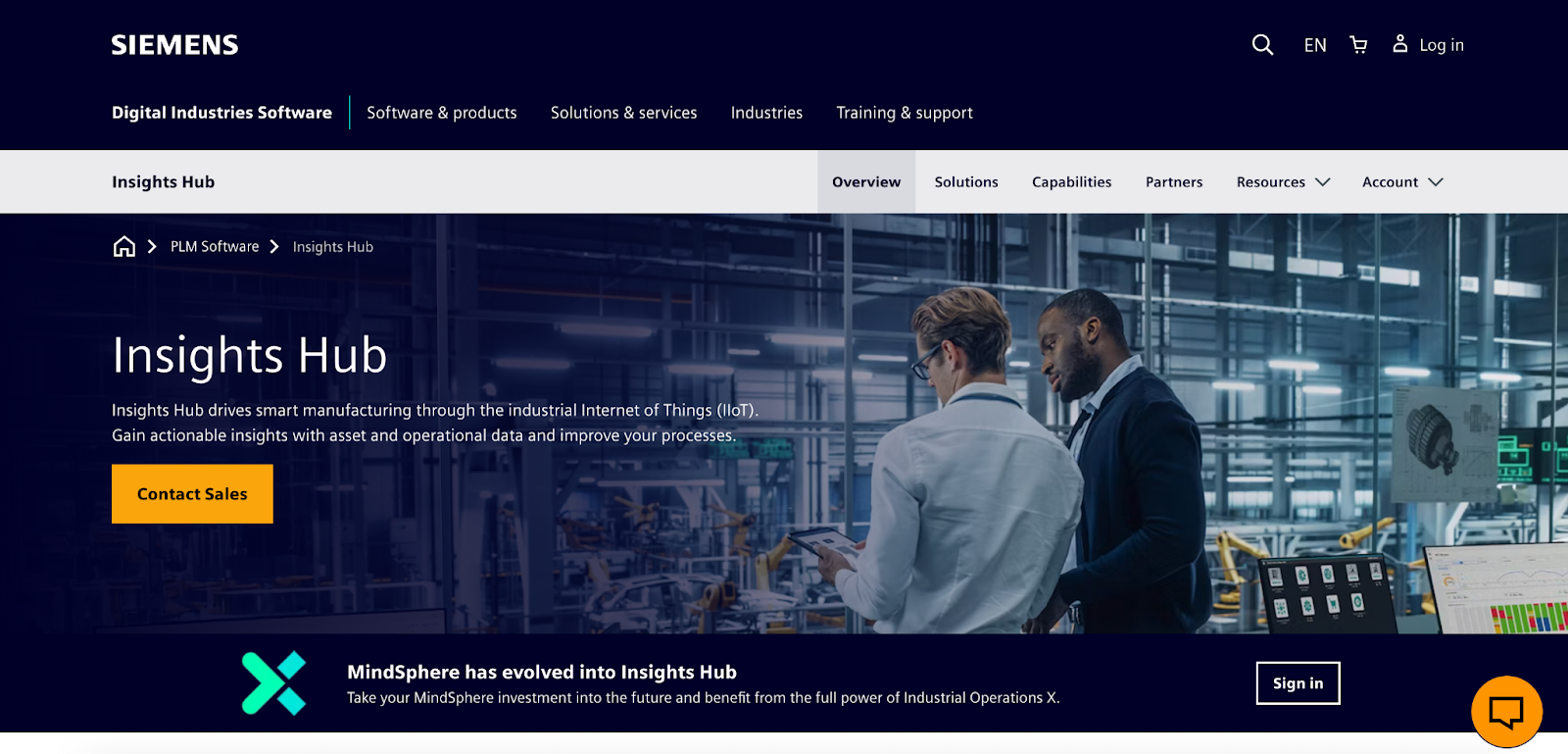
Siemens Insights Hub, formerly MindSphere, is Siemens’ industrial IoT platform within the Industrial Operations X portfolio.
It’s built to help manufacturers and industrial organizations connect assets, collect operational data, and turn that data into actionable insights across production, quality, and maintenance processes.
Key features
- Operational analytics and performance management: It supports use cases like asset monitoring, overall equipment effectiveness (OEE), energy optimization, and production performance analysis.
- Manufacturing-focused IoT applications: Out-of-the-box and configurable applications support condition monitoring, predictive maintenance, quality prediction, and intralogistics optimization.
Pricing
Siemens Insights Hub pricing isn’t publicly listed, but it depends on selected capability packages, the number of connected assets, and the deployment scope.
Where Siemens Insights Hub shines
- Smart manufacturing and Industry 4.0 programs: Insights Hub performs best in manufacturing-led initiatives focused on production transparency, asset performance, and continuous process improvement.
- Siemens-standardized environments: Organizations already using Siemens PLCs, automation hardware, and industrial software benefit from native integration and reduced implementation friction.
Where Siemens Insights Hub falls short
- Slower time-to-value: Advanced capabilities often require additional setup before delivering results.
- Customization often depends on Siemens tooling: Extending or adapting Insights Hub beyond scummtandard use cases typically requires deeper Siemens-specific tools and expertise.
Customer reviews
“It can feel overwhelming at times — there’s so much data and so many tools that it takes a while to become familiar with everything. It lacks a clear and accessible new-user-friendly guide, and at times the site feels very crowded,” says Wendy Z.
Who Siemens Insights Hub is best for
- Manufacturers running Siemens automation: Especially those standardizing on Siemens OT, PLCs, and industrial software.
- Large industrial enterprises: Executing long-term smart manufacturing and digital operations strategies.
You can also explore our step-by-step guide on industry 4.0 implementation to learn how to navigate common deployment challenges across your facilities.
4. PTC ThingWorx
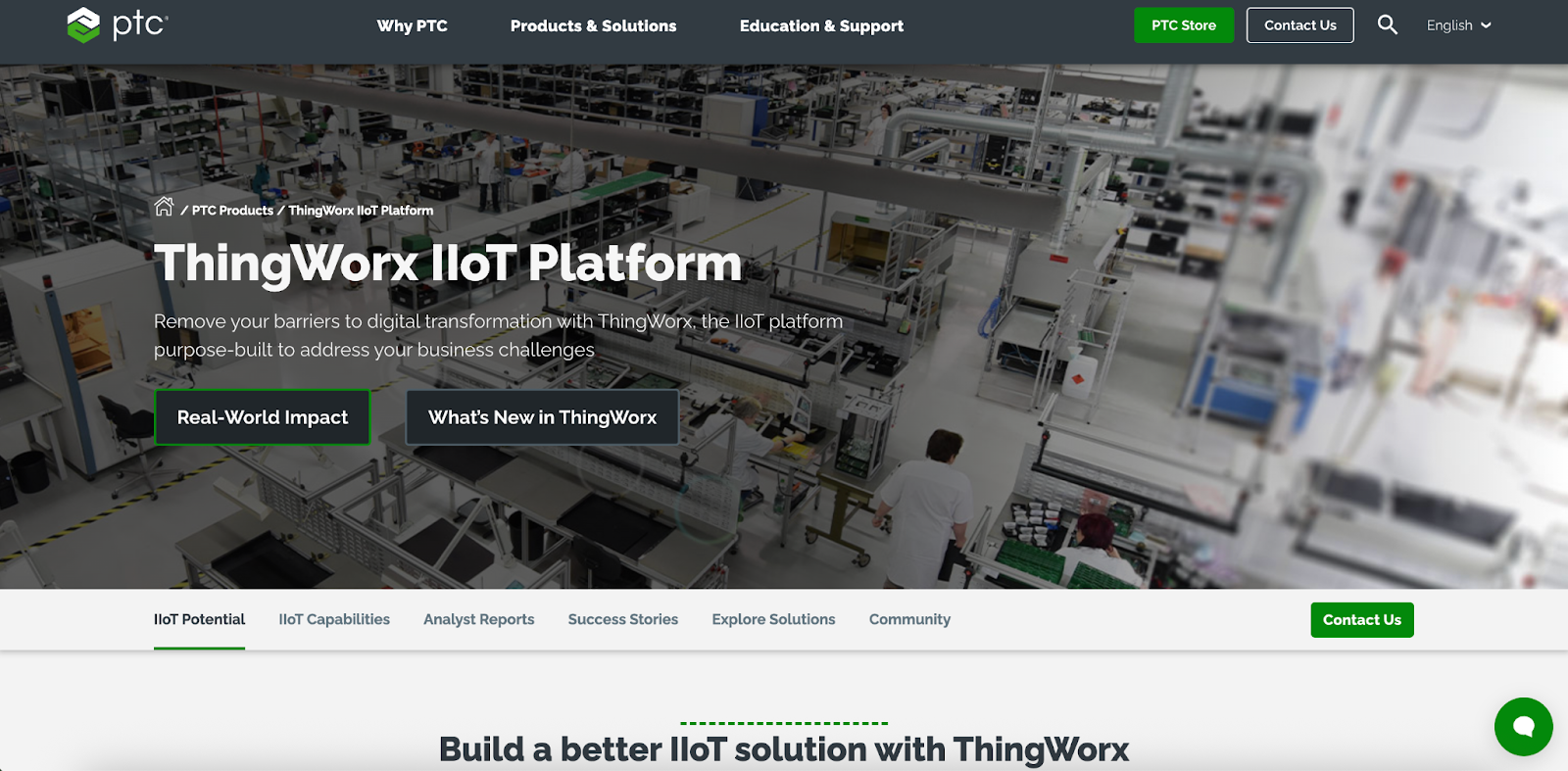
PTC ThingWorx is an industrial IoT and AI platform designed to help organizations build, deploy, and scale industrial applications that connect assets, people, and processes.
Rather than focusing solely on connectivity or analytics, ThingWorx emphasizes turning industrial data into practical application-led workflows that support manufacturing, service, and engineering teams.
Key features
- Low-code industrial application development: ThingWorx provides tools to build dashboards, workflows, and role-based industrial applications with less custom development.
- End-to-end IIoT capabilities: It covers device connectivity, data modeling, analytics, and application management. This lets organizations address multiple IIoT use cases within a single environment.
Pricing
PTC does not publish ThingWorx pricing. Costs are based on deployment model, scale, and selected capabilities.
Where PTC ThingWorx shines
- Application-centric industrial IoT initiatives: ThingWorx performs best when organizations want to build custom industrial applications that deliver business value across manufacturing, service, and engineering teams.
- Experience-driven use cases: Integration with PTC technologies such as Vuforia enables AR-supported workflows for field service, maintenance, and training scenarios.
Where ThingWorx falls short
- High barrier to entry: Getting real value from ThingWorx requires experienced technical teams and time to learn the platform.
- Cost and licensing complexity: Pricing is enterprise-focused and not transparent up front. This makes budgeting difficult for smaller organizations.
- Operational overhead at scale: Managing upgrades, versions, and long-term maintenance can become complex in large deployments without strong internal governance.
- Not an infrastructure or runtime management platform: ThingWorx focuses on building applications and workflows, not managing container platforms, edge runtimes, or deployment operations.
Customer reviews
“They can improve the analysis process by taking more real-time data into account, so it will more accurately provide asset health. Also, this is costly, so small-sized organizations cannot afford to implement it,” shares Chirag P.
Who PTC ThingWorx is best for
- Organizations invested in the PTC ecosystem: Teams already using Kepware, Vuforia, or PTC’s PLM tools that want a tightly integrated IIoT platform.
- Asset-intensive enterprises: Organizations prioritizing application logic, workflows, and operational intelligence over infrastructure management.
5. AWS IoT
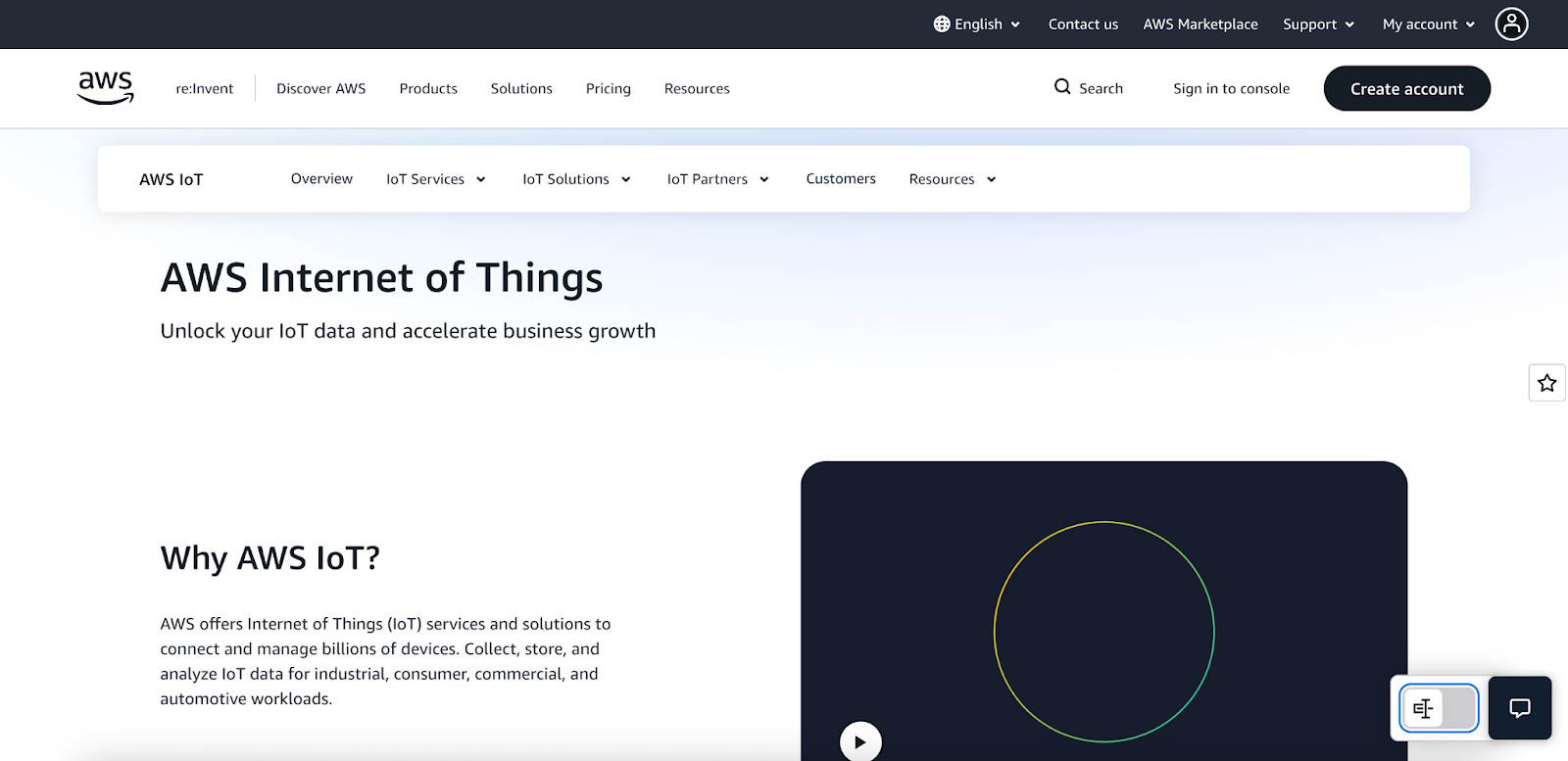
AWS IoT is Amazon Web Services’ suite of Internet of Things services designed to securely connect, manage, and analyze data from billions of devices.
Rather than a single, monolithic platform, it provides modular services that span device connectivity, edge computing, data ingestion, and analytics, all tightly integrated with the broader AWS cloud.
AWS IoT focuses on device connectivity, data ingestion, and cloud services, rather than day-to-day container or runtime operations on edge devices.
Key features
- Secure device connectivity and fleet management: AWS IoT Core enables secure, bi-directional communication via MQTT and HTTP, while AWS IoT Device Management supports registering, monitoring, and updating large fleets of devices at scale.
- Edge computing and local intelligence: AWS IoT Greengrass allows data processing, messaging, and machine learning inference to run locally on edge devices while remaining connected to cloud services.
- Industrial data and digital twin services: Services like AWS IoT SiteWise and AWS IoT TwinMaker help industrial teams model assets, collect equipment data, and visualize operations across factories and facilities.
Pricing
AWS IoT uses usage-based pricing tied to messaging, connected devices, and data processing. Costs vary significantly by scale and service mix.
Where AWS IoT shines
- Cloud-first industrial architectures: Strong fit for organizations standardizing on AWS for analytics, storage, and AI workloads.
- Broad service ecosystem: Teams can combine IoT services with AWS analytics, machine learning, and security tools to build highly customized solutions.
Where AWS IoT falls short
- Costs scale quickly with volume: AWS IoT pricing increases as device counts, data ingestion, and services grow, which can make long-term usage expensive.
- Security and configuration complexity: Managing certificates, security policies, and device configurations can be complex, especially when managing large fleets without consistent tagging.
Teams running containerized workloads on AWS can explore AWS container security practices to better manage these risks at scale.
Customer reviews
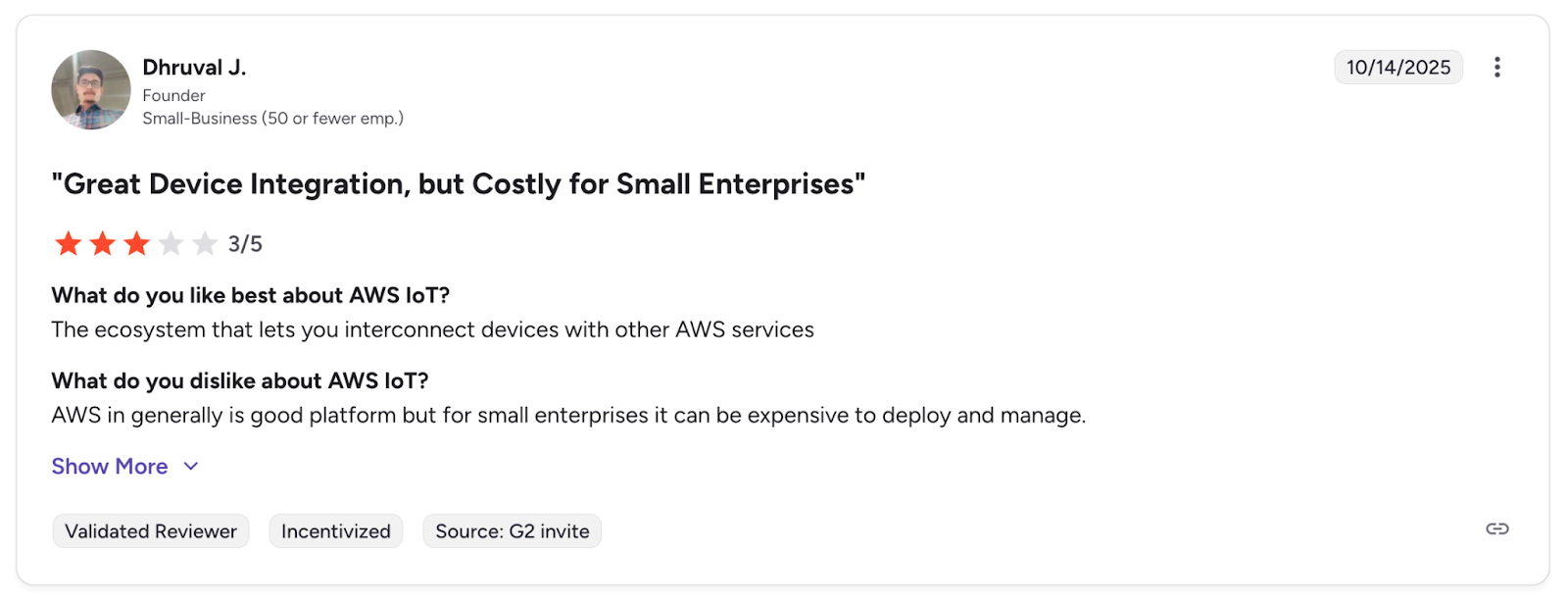
Source: G2
“Flexibility is one of the downsides from a User/Customer perspective. Every customer wants more flexibility in connectivity and device management to bring in their existing 3rd party vendors to integrate, which is not very much possible due to the closed ecosystem of AWS IoT,” says Sudhakar P.
Who AWS IoT is best for
- Cloud-native enterprises: Organizations already operating on AWS that want to extend their cloud strategy to industrial IoT.
- Engineering-led IoT teams: Teams comfortable assembling and operating IoT solutions from modular cloud services.
How to Choose the Best Industrial IoT Platform
Here’s what to look for when choosing an industrial IoT platform for modern industrial and edge operations:
1. Operational scope and responsibility boundaries
Before evaluating tools, clarify what you expect the platform to own. Some platforms focus on device data, analytics, and digital twins, while others focus on running, updating, and governing applications in production.
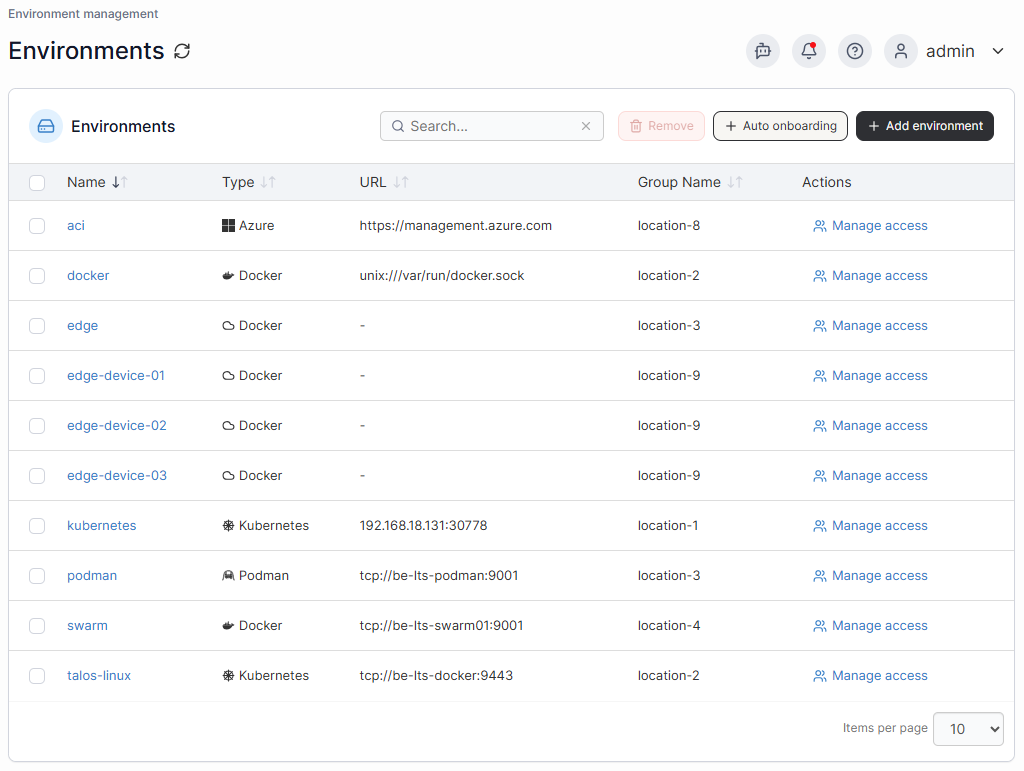
If your challenge is managing containerized applications and updates across distributed edge environments, platforms like Portainer are built for that layer. Portainer supports lightweight Docker deployments for IIoT devices and extends to Kubernetes where hardware and use cases allow.
2. Governance across teams and locations
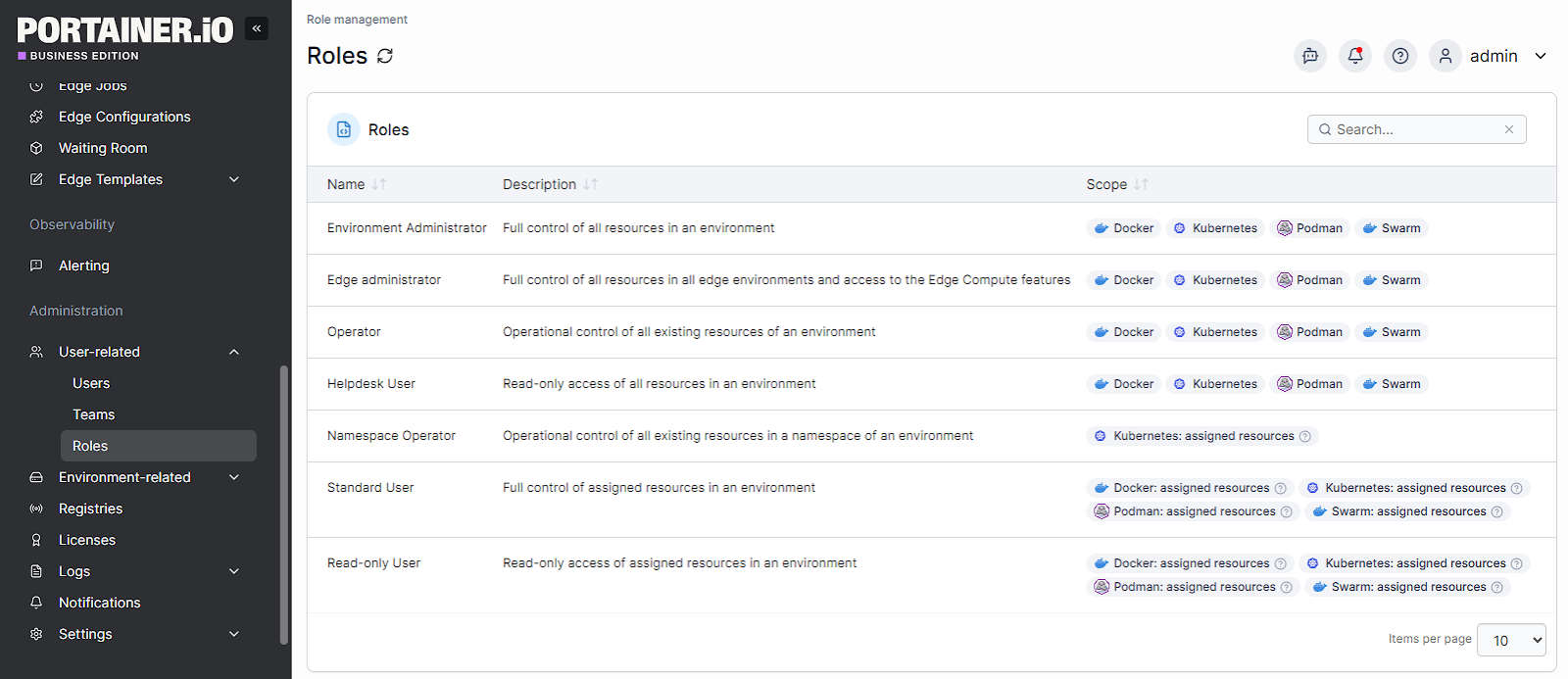
Industrial environments often involve shared infrastructure, external vendors, and geographically distributed teams. A platform should support clear access boundaries without creating operational friction.
Portainer’s role-based access model demonstrates how governance can remain consistent across environments without forcing teams to use separate tools or workflows.
Teams looking to strengthen this layer further can also explore dedicated container security tools that complement platform-level governance.
3. Deployment consistency at scale
As edge environments grow, manual updates and ad-hoc deployments quickly become a risk. Look for platforms that support standardized, repeatable application deployments that scale cleanly across devices and sites.
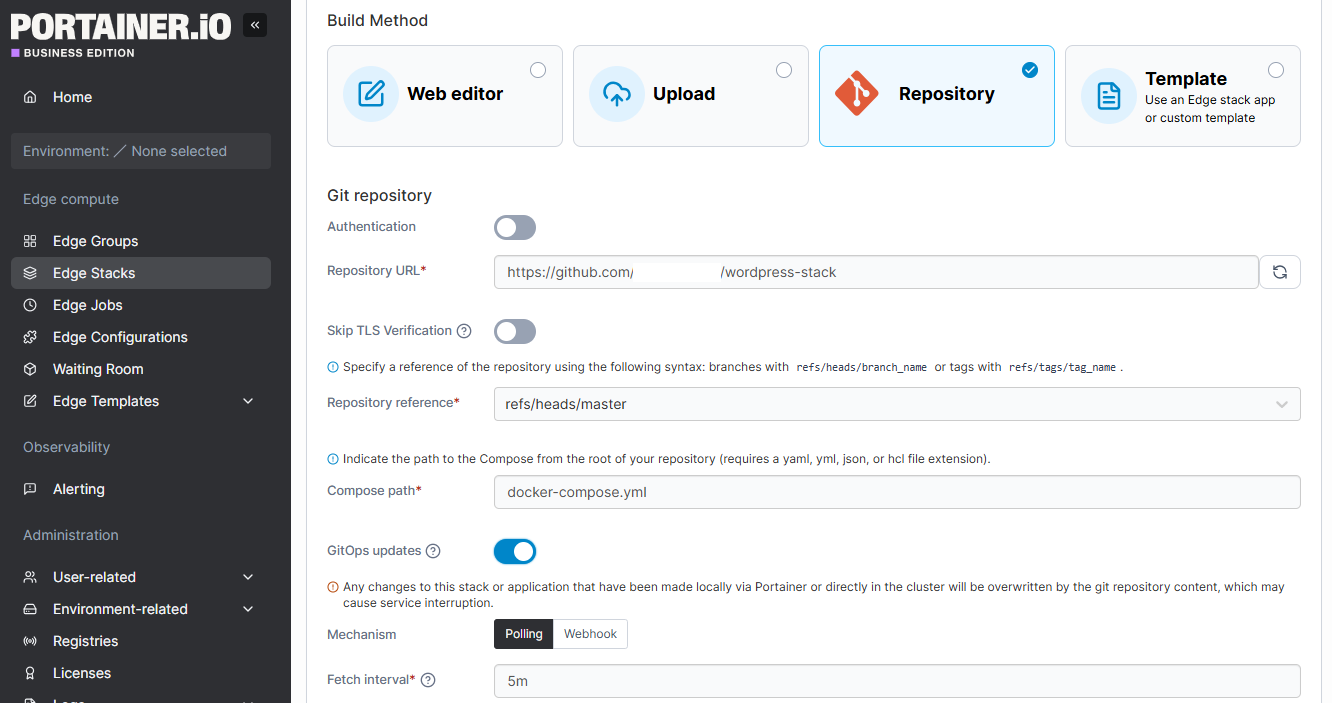
Portainer supports template-based and Git-driven deployments, helping teams roll out changes predictably while reducing configuration drift in distributed industrial environments.
4. Freedom from platform lock-in
Industrial IoT stacks evolve over time. The platform you choose should adapt to changes in infrastructure, cloud strategy, or tooling over time.
Portainer’s support for Docker, Kubernetes, Podman, and hybrid environments is a good example of how teams can retain control without committing to a single ecosystem.
Run Industrial IoT at Scale Without Losing Control with Portainer
Industrial IoT platforms solve different problems. Some focus on collecting and analyzing device data, while others prioritize applications, automation, or analytics. Regardless of the approach, once environments scale across edge, on-prem, and cloud, teams need stronger operational control to maintain consistency and reliability.
That’s where Portainer stands out. It gives platform, DevOps, and operations teams a secure, vendor-agnostic way to run and govern containerized workloads across industrial environments. It supports lightweight Docker on IIoT devices and extends to Kubernetes where appropriate.
Want to see Portainer in action? Book a demo with our sales team to explore how the Industrial App Portal brings structure and control to industrial edge operations.
One platform, not twelve tools.
Govern Kubernetes across your whole fleet from a single control plane. Get 3 nodes free.
Get 3 nodes freeTalk to technical sales